Panda Pod
In my collaboration with the owners, Creative Director, and Interior Designer of Panda Pod, a unique Pod-style hotel in Richmond, British Columbia, I helped to refresh their brand and improve their customer experience by rebuilding their website and creating a new App. As a 3D artist, I also played a role in bringing the hotel’s new look and feel to life by pre-visualizing the interior and exterior spaces to match the Interior Designer’s vision. The end result was a modern and user-friendly platform for booking, payments, and other features, providing guests with a convenient and affordable alternative to traditional hotels.
Position
Senior UI/UX Designer
3D Modelling / Rendering
Year
2021
Projects
-
Led the full redesign of their digital presence, including a companion mobile app to streamline guest check-in and checkout
-
Partnered closely with Marketing to concept and execute campaign visuals across web and promotional channels
-
Collaborated with the interior designer to visualize future hotel upgrades through high-fidelity 3D renderings

PandaPod
My Role
For Panda Pod, I led the UI/UX design of the website and mobile experience, partnering closely with marketing stakeholders to define the brand’s digital presence from the ground up. As an early team member, I also helped establish project workflows and systems to support a growing cross-functional team.
I designed a fully responsive website focused on clarity, usability, and conversion, helping communicate a new hospitality concept in a way that built trust quickly.
In parallel, drawing on my background in 3D and environment design, I worked with the interior designer to translate early sketches and floor plans into realistic renderings. These visualizations helped stakeholders and investors clearly understand the spatial experience before construction.

The Challenge
-
Deliver a fully realized digital product within a tight six month timeline while collaborating with a newly formed cross-functional team.
-
Translate established brand guidelines into a cohesive, scalable design system that could support both web and mobile experiences.
-
Design a fully featured app with third-party integrations, ensuring performance, clarity, and long-term flexibility.
-
Align closely with the Creative Director to integrate marketing campaigns and brand storytelling across the website and app, while also collaborating with the Interior Designer to create accurate 3D models and renderings of planned hotel upgrades.
Creative Process
The project began by aligning business goals, brand direction, and user needs within a four-month timeline. With web, mobile, and 3D visualization moving in parallel, the focus was building one cohesive system rather than separate outputs
.
I translated the refreshed brand into a scalable design foundation that powered both the responsive website and companion app, ensuring shared components, consistent interactions, and room for future growth.
Working closely with marketing and the interior designer, I refined the digital experience through iteration and testing, while developing realistic 3D visualizations that helped communicate the future hotel experience before launch.

Desktop Search Entry


PandaPod Mobile Experience Design
The PandaPod app was designed to extend the hotel experience beyond the front desk, giving guests control over their stay directly from their device. Phase one focused on core functionality: mobile booking, digital check-in and check-out, and user profile management for a seamless, self-serve experience.
The app was built to align visually and functionally with the website, creating a consistent brand experience across platforms while simplifying key actions during a guest’s stay.
Future phases introduced experiential features such as local exploration, curated offers from nearby businesses, concierge-style services, and a gamified rewards concept that blended neighborhood discovery with exclusive discounts. The goal was to transform the app from a utility tool into a value-added hospitality companion.

Desktop Search Entry
PandaPod Mobile Experience Design
-
Platform Consistency
Unified visual language and interaction patterns between web and app to ensure a seamless cross-platform experience.
-
Mobile Booking Flow
Streamlined in-app reservation process designed to reduce friction and support fast decision-making.
-
Digital Check-In / Check-Out
Self-serve functionality that minimized front desk dependency and improved operational efficiency.
-
Profile & Stay Management
Centralized account management for bookings, preferences, and stay history to enhance personalization.
-
Neighborhood Exploration
Integrated discovery feature connecting guests with curated local experiences, offers, and gamified rewards.
Web Experience & System Design
The website established the visual and interaction foundation for the entire Panda Pod ecosystem. I led the UX and visual direction in close collaboration with the creative director and client, translating refreshed brand guidelines into a scalable digital system.
We mapped core user journeys first, defining feature requirements and conversion paths before moving into wireframes and interactive prototypes. The experience evolved through multiple iterations, balancing hospitality storytelling with functional clarity. Final high-fidelity prototypes were fully interactive prior to development handoff, ensuring alignment across design and engineering.


3D Visualization & Spatial Development
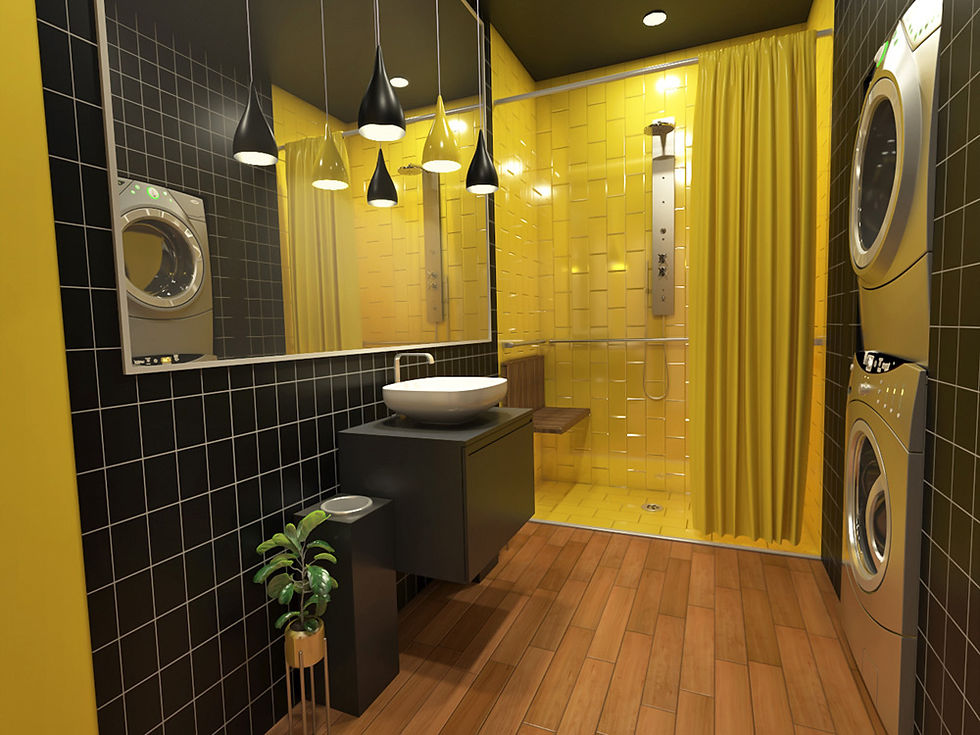
To support the redesign of Panda Pod’s interior and exterior spaces, I translated architectural plans and early concept sketches into fully realized 3D environments. Working closely with the interior designer, I built detailed models in 3ds Max and rendered them in V-Ray to accurately visualize materials, lighting, and spatial flow.
These visualizations were not just marketing assets — they were working design tools. By moving from flat plans to immersive 3D spaces, we were able to test layouts, refine finishes, validate lighting conditions, and resolve spatial constraints before construction began.
The final renders served both as internal alignment tools and as forward-facing visuals for stakeholder presentations and marketing use.
Lobby
Original

Original

Kitchen
Original

Original

Accessible Washroom
Original

Original

Accesible Washroom
Original

Original

Project Outcome
Over a six month contract, I established the design foundation for Panda Pod’s relaunch across web, app, and physical space. High-fidelity interactive prototypes and detailed 3D visualizations were delivered to guide development and construction, aligning brand and experience beyond the scope of my contract.